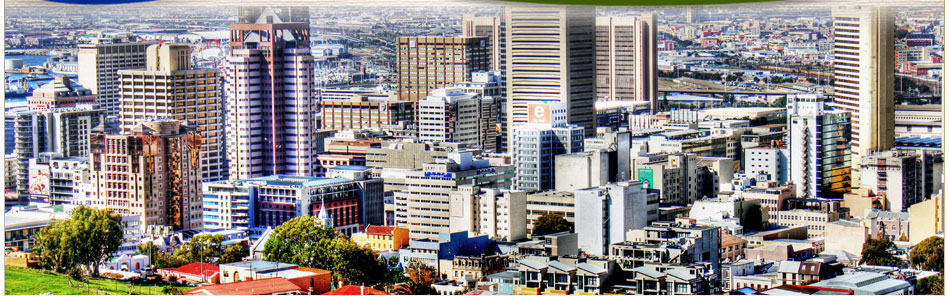
CapeTown
Tour
Although the founder of the Cape Colony,
Jan van Riebeeck, planted vines and made
wine himself, it was not until the arrival
of Governor Simon van der Stel in 1679 that
wine-making began in earnest. Van der Stel
created Groot Constantia, the superb estate
on the flanks of Table Mountain, and passed
on his wine-making skills to the burghers
who settled around Stellenbosch.
Between 1688 and 1690, some 200 Huguenots
arrived in the country. They were granted
land in the region, particularly around
Franschhoek (which translates as 'French
Corner'), and, although only a few had wine-making
experience, they gave the infant industry
fresh impetus.
For a long time, Cape wines other than
those produced at Groot Constantia were
not in great demand and most grapes ended
up in brandy. The industry received a boost
in the early 19th century as war between
Britain and France meant more South African
wine was imported to the UK.
Apartheid-era sanctions and the power of
the Kooperatieve Wijnbouwers Vereeniging
(KWV; the cooperative formed in 1918 to
control minimum prices, production areas
and quota limits) didn't exactly encourage
innovation and instead hampered the industry.
Since 1992 the KWV, now a private company,
has lost much of its former influence.
Many new and progressive wine makers are
leading South Africa's reemergence onto
the world market. New wine-producing areas
are being established away from the hotter
inland areas, in particular in the cooler
coastal areas east of Cape Town around Mossel
Bay, Walker Bay and Elgin, and to the north
around Durbanville and Darling.
Weather &
Climate
If you've spent time in the Mediterranean
then you've experienced Cape Town's climate.
The summers are generally warm and dry,
while winters tend to be wet and cool, the
rains brought on by fierce northwesterly
gales. Neither season experiences extremes
of temperature, thanks to prevailing winds.
Be prepared though for 'four seasons in
one day'. The peninsula's shape creates
microclimates, so you can be basking in
the sun on one side of the mountain and
sheltering from chilly rain and winds on
the other. It's no accident that Newlands
is so lush in comparison to Cape Point -
the former receives four times as much rain
annually as the latter.
Places
to Visit
There is plenty to see and do while in Cape
Town and even if your aim is to merely relax
and stay away from the so called 'tourist'
activities, there are many attractions that
are definitely well worth a visit. Here
are some of the major attractions in and
around Cape Town. Be sure to leave some
time for a relaxed scenic drive around the
peninsula too - you'll see beautiful scenery
from oceans to mountains and vineyards and,
can stop off at various view points for
a picnic or just to take it all in.
Atlantic
Seaboard, Cape Town
The Atlantic Seaboard, also known as Cape
Town’s ‘Riviera’, stretches
from the Victoria & Alfred Waterfront
on the north shore of Table Mountain all
the way down the west side of the cape peninsula
to Hout Bay.
This incredibly beautiful stretch of coast
is connected by the most picturesque, scenic
drive along Victoria Road and properties
on this stretch of South Africa’s
Cote d’Azur fetch unprecedented prices,
now that this truly beautiful part of the
coast is so sought after.
The Atlantic Seaboard never fails to buoy
one’s spirits, with the glistening
Atlantic Ocean on one side and the magnificent
slopes of Lion’s Head and the Twelve
Apostles on the other; one is easily transported
by the sheer splendour of the setting.
Bakoven
Bakoven’s beach is often overlooked
in favour of the more trendy Camps Bay just
minutes away, but make no mistake, Bakoven
is one of the most sought after suburbs
in Cape Town and the views from here are
simply spectacular.
Bakoven has been called Camps Bay’s
baby sister, but its exclusivity and charming
village-like feel that the neighbourhood
has managed to maintain has been deliberately
kept this way to avoid the constant hustle
and bustle of its popular counterpart. On
the other hand, if it’s a hub of energy
and activity you’re after, then Bakoven’s
location, just as you leave Camps Bay en
route to Llandudno, is perfect. You’re
close to the action but away from the noise
when you so choose.
The beach at Bakoven is small and zealously
protected by locals, but its natural beauty
and the combination of big boulders and
white sands make it a superb haven for sundowners,
and its little coves protect it from the
wind.
Cape
Town Beaches
The Mother City has some of the most beautiful
beaches in the world and something to offer
everyone. It is no surprise that South Africa
was one of the first countries outside of
Europe to earn blue flag status for some
of her beaches - there are three on offer
in and around Cape Town.
The blend of 2 oceans (the Atlantic Ocean
and the Indian Ocean) and hence 2 different
styles of beach, divided by a 1000m high
peninsula, leaves Cape Town an unrivalled
holiday destination.
The west side of the Cape Peninsula, on
the Atlantic Ocean, has a very definite
style of beach. This is where the more fashionable
set go to see and be seen, particularly
along the Atlantic Seaboard, also known
as Cape Town’s "Riviera",
which stretches from the V&A Waterfront
on the north shore of Table Mountain up
as far as Hout Bay and is connected by one
of the most picturesque, scenic drives along
Victoria Road.
Beaches here enjoy longer sunshine hours,
incomparable sunsets and more protection
from the "Cape Doctor" (Cape Town’s
infamous south easterly) than the False
Bay side of the Cape peninsula. There is
a spectacular selection of unspoilt beaches
with seas that are usually 3 to 4 degrees
colder than the Indian Ocean but this doesn’t
seem to worry anyone soaking up the sun
against the backdrop of blue skies and white
sands.
North of the Atlantic Seaboard are the
beaches of Table Bay. These sport the picture-postcard
views of Cape Town over Table Mountain and
Robben Island and tend to be more popular
with locals, particularly kitesurfers. Beyond
Hout Bay, beaches such as Noordhoek and
Scarborough are less frequented but no less
beautiful, rather they’re where the
locals can get away from the crowds.
Table Bay
Beaches
The fact that these beaches are great for
windsurfing and kitesurfing should alert
one to the wind factor. Table Bay’s
beaches can be unpleasant when the wind
blows but nothing beats these beaches for
their view of Table Mountain and Robben
Island and the miles of sand on which to
stretch your legs. The acrobatics of kitesurfers
will keep you entertained if you’re
not working on your tan or taking a quick
dip.
Big Bay has two rocky outcrops that jutt
out into the sea, creating a bay.
Bloubergstrand has some lovely rock pools
and the viewpoint from here of the bay and
Table Mountain has graced many a postcard.
Table View has a number of restaurants
and venues for sundowners and Dolphin beach
is the first of this series of beaches reached
from the M14 and is synonymous with kitesurfing.
See the link for photographs and video of
kite surfing in this area.
Milnerton is well known for its lighthouse,
which sits virtually on the beach and is
great for swimming as, unlike Dolphin beach,
it is manned by lifeguards. There are also
a number of beach cafes and restaurants
here.
|